
Tangram City
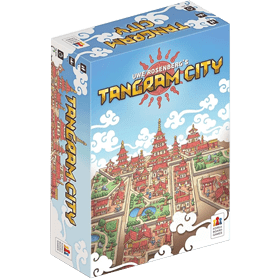 很久以前,在一个美丽的东方王国,女王召集了她的城市规划师,为子民们建造宏伟的新城市。传统要求人与自然两界保持和谐,而矩形被视为建造城防的理想形状。城市规划师们出发了,为女王建造新城市。谁能建出最好的城市,赢下王国的所有财富呢?
在《Tangram City》中,你利用「下一块城市板块会是什么」的秘密信息,在自己的版图上放置城市板块。由于城市板块是双面的,规划布局时要将和谐与矩形形状牢记在心。每轮结束时,你根据版图上最大的矩形获得分数;游戏结束时,还会因两界之间的和谐获得奖励分。
· 使用双面七巧板板块,建造一座宏伟和谐的城市
· 利用只有你掌握的秘密信息,提前规划布局
很久以前,在一个美丽的东方王国,女王召集了她的城市规划师,为子民们建造宏伟的新城市。传统要求人与自然两界保持和谐,而矩形被视为建造城防的理想形状。城市规划师们出发了,为女王建造新城市。谁能建出最好的城市,赢下王国的所有财富呢?
在《Tangram City》中,你利用「下一块城市板块会是什么」的秘密信息,在自己的版图上放置城市板块。由于城市板块是双面的,规划布局时要将和谐与矩形形状牢记在心。每轮结束时,你根据版图上最大的矩形获得分数;游戏结束时,还会因两界之间的和谐获得奖励分。
· 使用双面七巧板板块,建造一座宏伟和谐的城市
· 利用只有你掌握的秘密信息,提前规划布局
玩家人数: 1 - 5
游戏时长: 13 mn
复杂度: 2 / 5
在线上玩 Tangram City 以及 1365 款其他游戏。
无需下载——直接在浏览器上玩.
与您的朋友以及来自世界各地的玩家一起.
免费。


在线上玩 Tangram City 以及 1365 款其他游戏。
无需下载——直接在浏览器上玩.
与您的朋友以及来自世界各地的玩家一起.
免费。
玩法简介
The following rules apply to placing City and Fountain Tiles:
Players may:
- Place the Tiles on empty squares
- Rotate and flip the Tiles before placing them
- Place the Tiles exclusively on your own City Board
Players may not:
- Overlap or stack the Tiles
- Extend them beyond the edge of your City Board
- Move them once the next Card has been revealed
It is not mandatory to place the Tiles adjacent to each other. However, the importance of doing so will become evident during the round scoring. Additionally, players are allowed to refrain from placing Tiles. In that case, they simply set the corresponding Tile aside. They may not play it at a later time.
The game consists of 5 regular rounds and a 6th Final round, which has slightly different rules.
The process for the 5 regular rounds is always the same:
1. DEAL CARDS In each round, 4 Cards are dealt to all players, regardless of the number of players. However, the distribution varies depending on the number of players:
If you are playing alone, lay out the 4 Cards in a row in front of you. The first 2 Cards are face-up, while the last 2 Cards are face-down.
If you are playing with 2 players, each player receives 1 Card face-down in their hand. The other 2 Cards are placed in the middle of the table, with 1 Card face-up and 1 Card face-down.
If you are playing with 3 players, each player receives 1 Card face-down in their hand. The last Card is placed face-up in the middle of the table.
If you are playing with 4 players, the player with the Start Marker and the player to their left each receive 1 Card face-down in their hand. The remaining 2 players receive 1 shared Card. The last Card is placed face-up in the middle of the table.
If you are playing with 5 players, the player with the Start Marker receives 1 Card facedown in their hand. The next 2 players to the left of the Start player receive 1 shared Card, as do the remaining 2 players. The last Card is placed face-up in the middle of the table. You are allowed to look at the Card in your hand or the Card you are sharing with someone
2. PLAY CARDS The Cards are played starting with the face-up Card in the middle. If you have any facedown Cards in the middle (depending on your player count), play them next. Then, play the Card of the player with the Start Marker, and continue clockwise until all Cards are played.
To play a Card, each player selects the corresponding City Tile from their set and places it on their City Board according to the puzzle rules.
Once everyone has placed the corresponding Tile, the next Card is played. Note that all Cards, disregarding their position, must be played by all players.
You are allowed to refrain from placing Tiles, but you may not place it at a later time. Cards with an exclamation mark on them are very similar to others. Be careful to place the correct City Tile.
3. PLACING FOUNTAIN TILES After all 4 Cards of a round have been played, each player takes one of their Fountain Tiles and places it according to the puzzle rules.
4. ROUND SCORING After placing the Fountain Tiles, it’s time for a round scoring. Each player looks at their City Board and finds the largest fully built rectangle. Players earn as many points as the rectangle has squares. For example, if you have a rectangle of 3x4 squares in your City, you earn 12 .
Scoring example: A City built as depicted would score you 16 , as the biggest rectangle is 4x4 squares. Anything outside of the biggest rectangle is not counted. Note that for the round scoring, the color of the City Tiles is irrelevant. Only the fact that the squares are fully built matters.
5. ROUND END Before moving on to the next round, there are a few steps to be taken.
Each player counts the number of squares in their City that are fully built with Red Tiles and adjusts their Red Balance Marker accordingly on their Balance Scale. Do the same with the Green Tiles and the Green Balance Marker (see the scoring example above).
Squares that are fully built with both a Red and a Green Triangle do not count for either color. However, if a Red or Green Triangle is combined with a Fountain Tile on a square, that square counts for the corresponding color. If there are two Fountain Tiles on one square, it does not correspond to any color, and, therefore, has no influence on your Balance.
Once everyone has finished this, place the 4 Cards of this round on a shared discard pile. Pass the Start Marker to the person who currently has the highest score. If multiple players have the highest score, the Start Marker must be given to the next player with the highest score in clockwise direction of the previous starting player. This rule also applies when the previous starting player has the highest score as well.
FINAL ROUND (ROUND 6) After playing 5 regular rounds, there are only 3 Cards left in the deck. Reveal these Cards in the middle of the table. Now, all players simultaneously place these last 3 City Tiles on their City Boards according to the puzzle rules. Once everyone is done, each player receives their final Fountain Tile, and performs one last round scoring before reaching the end of the game. Adjust your Balance before reaching the end of the game
The game ends after the Final Round (Round 6). In addition to the points players have collected at the end of each round, they may receive bonus points.
PLANNING BONUS If a player has fully built the entire 7x7 grid of their City Board by the end of the game, they receive an additional 15 .
BALANCE BONUS Now, each player checks the distance between their Red and Green Balance Markers. Depending on the distance between the two Markers, players receive additional bonus points: Distance = Bonus Points O = 2O points 1-2 = 1O points 3-4 = 5 points 5+ = O points After the bonus points ( ) have been awarded, compare your final scores. The player with the highest score wins the game. If players tie for first place, they share the victory.