
Perikles
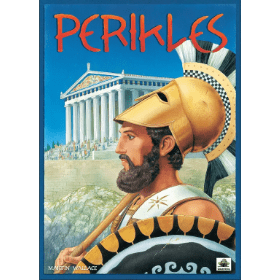 Perikles是Martin Wallace设计的一款游戏。 玩家扮演一个贵族家族,试图成为6个古希腊城邦中的一个或多个的领导者。 游戏分为两个阶段进行:
在第一个游戏中,玩家要争夺六个城邦中每个城邦的地区控制权,最终以选举结束。赢得各城邦选举的玩家可以控制该城邦的军队。
在第二阶段,玩家使用卡牌调动自己的军队去攻击或防守该轮争夺的七场战斗(每场战斗都与一个城邦相关,而且不能攻击自己的城邦!)中的一场。
游戏机制简单明了,元素来自其他欧洲风格的战争游戏(尤其是马丁-华莱士的《帝国之争》)。Perikles 的独特之处在于将地区控制/投票阶段和军事阶段顺利融合在一起。
玩家人数: 3 - 5
游戏时长: 17 mn
复杂度: 4 / 5
在线上玩 Perikles 以及 1394 款其他游戏。
无需下载——直接在浏览器上玩.
与您的朋友以及来自世界各地的玩家一起.
免费。


在线上玩 Perikles 以及 1394 款其他游戏。
无需下载——直接在浏览器上玩.
与您的朋友以及来自世界各地的玩家一起.
免费。
玩法简介
Perikles
In Perikles, players represent influential Greek families. Over three epochs, they strive to gain political control in six city-states and lead the armies of these cities to victory in various battles.
Game Objective
Win by accumulating the most Victory Points (VP). Points are awarded at the end of each epoch for won battles (Statue tokens) and at the end of the game for controlling city-states.
Game Flow
The game is played over three epochs. Each epoch consists of two main phases: the Political Phase and the War Phase.
1. Political Phase (Influence & Control)
During this phase, players place their influence cubes to take leadership of the cities.
- Selecting Influence Tiles: Players take turns picking tiles that indicate which cities they can place cubes in.
- Placing Cubes: Cubes are placed in the six cities (Athens, Sparta, etc.).
- Elections: In each city, the player with the most cubes is checked.
- The player with the most cubes becomes the Leader of the city for that round.
- They receive the city's two Army Tiles (Land and Sea forces).
- Specific tie-breaking rules apply if necessary.
- Ostraka (Exile): Players can attempt to remove opposing cubes from cities to secure a majority.
2. War Phase (Battles & Strategy)
The leaders of the cities now deploy their armies to launch attacks against Persia or other Greek locations on the board.
- Deploying Armies: Players place their Army Tiles face-down on available locations. Battles are categorized as Land or Sea combat.
- Resolving Battles: Tiles are revealed. Combat is resolved by comparing combat strength (Strength values on tiles + a die roll).
- Attacker vs. Defender: The attacker must overcome the location's defense or the opposing armies present.
- Casualties: Defeated units are removed from the board.
- Rewards: The winner of a battle receives a Statue token, which provides VP at the end of the epoch.
Actions & Decision Factors
Influence Tile Categories
Tiles offer various tactical options:
- City Symbols: Allow placing 1 or 2 cubes in the corresponding city.
- Event Tiles:
- Plague: Reduces the number of cubes in a chosen city for all players.
- Treachery: Allows weakening or manipulating an army in battle.
- Persian Fleet: Can be used in sea battles to influence the outcome.
Military Units
- Hoplites (Land): Used for land battles in the regions.
- Triremes (Sea): Used for naval battles to secure control over the seas.
- Sparta Special Rule: Spartan land units are exceptionally strong in combat but have less political flexibility.
End of Game & Scoring
Final scoring takes place after the third epoch:
- Statue Points: Sum of points from all three epochs.
- City Control: Players holding leadership in a city at the end of the third epoch receive bonus VP based on the city's value.
- Remaining Influence: Minor points for leftover resources.
The player with the most total Victory Points is the winner.